Fleet
Real bindings across machines
Process identity, bind address, health, and relations from a single host or a paired fleet.
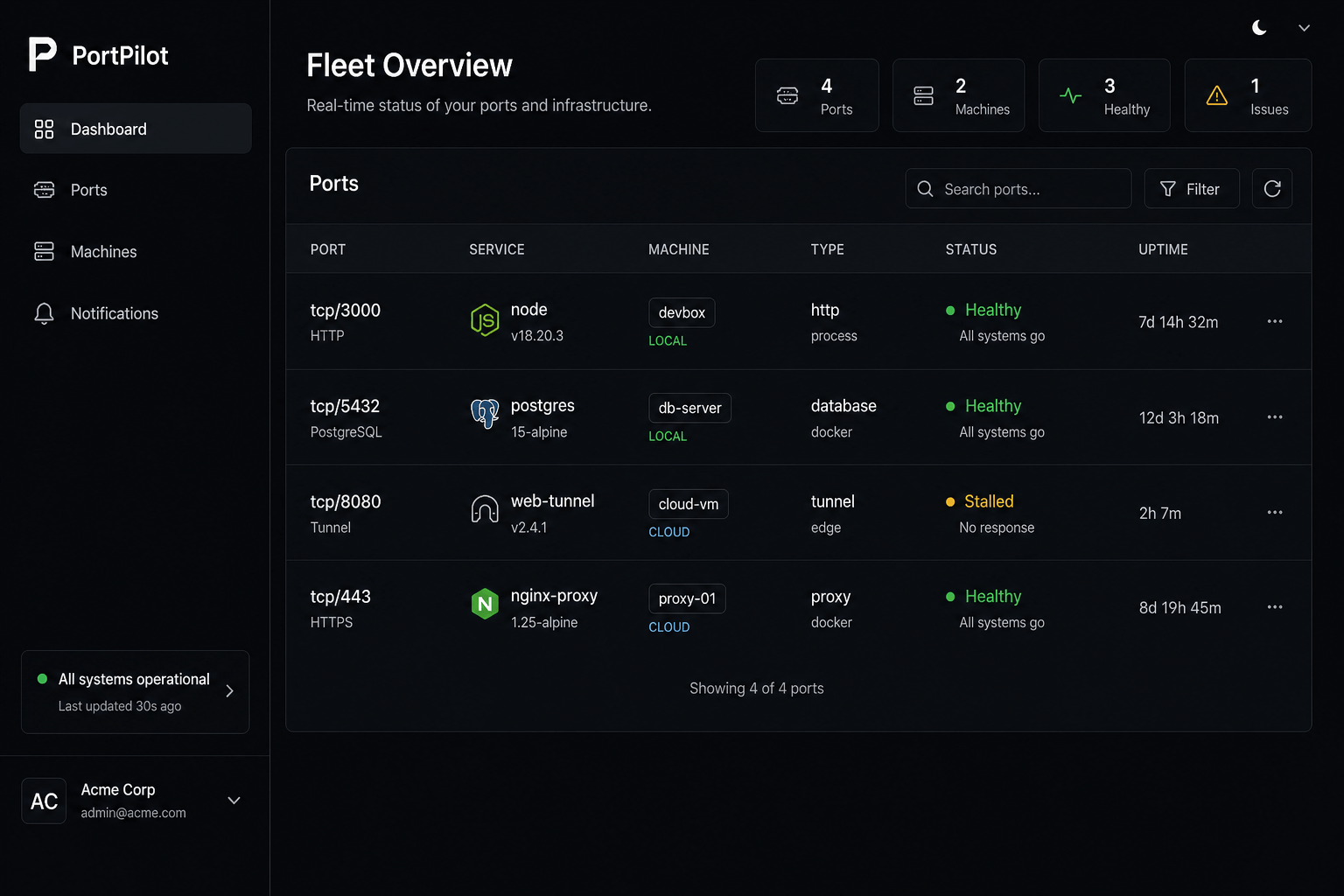
A local-first agent for developers and operators. See every listening port on Windows and Linux, diagnose health, and act through an allowlisted helper — no shell. Pair to Cloud when you want a fleet view.
Windows 10/11 x64 · Linux x86_64 · Cloud optional
Product
PortPilot is port-centric: listen, diagnose, and act with the same guards whether you use the website, CLI, or command palette.
Fleet
Process identity, bind address, health, and relations from a single host or a paired fleet.
01
Discovery runs where the sockets live. Windows and Linux agents speak the same protocol.
02
Port events survive restarts. Search and timeline stay local until you choose to sync.
03
Kill, service, and firewall go through ProcessGuard. There is no shell API.
04
Pair machines for a dashboard. Local observation keeps working when cloud is offline.
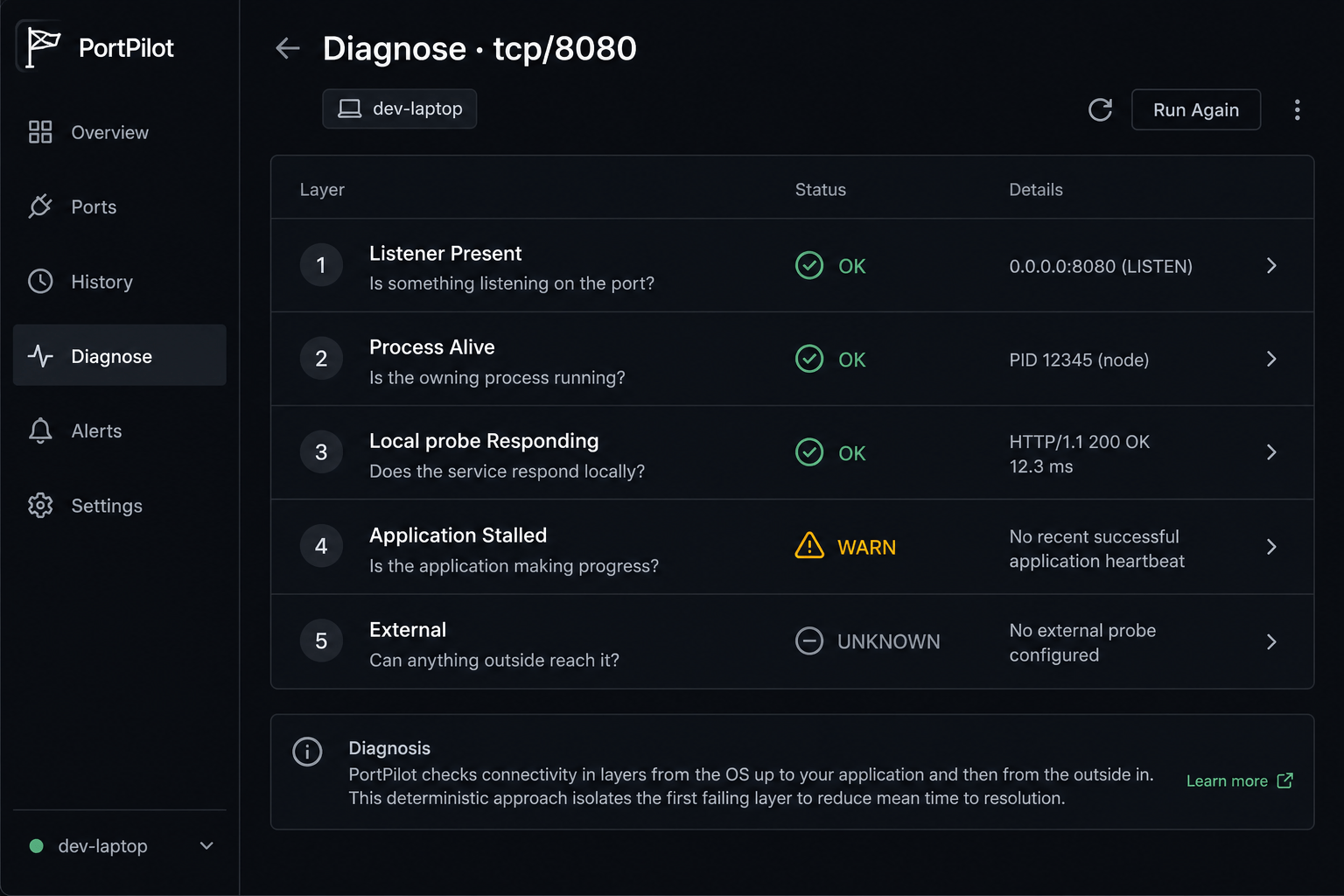
Discovery & health
Listening sockets, process identity, and deterministic health layers - including Unknown when we refuse to invent reachability.
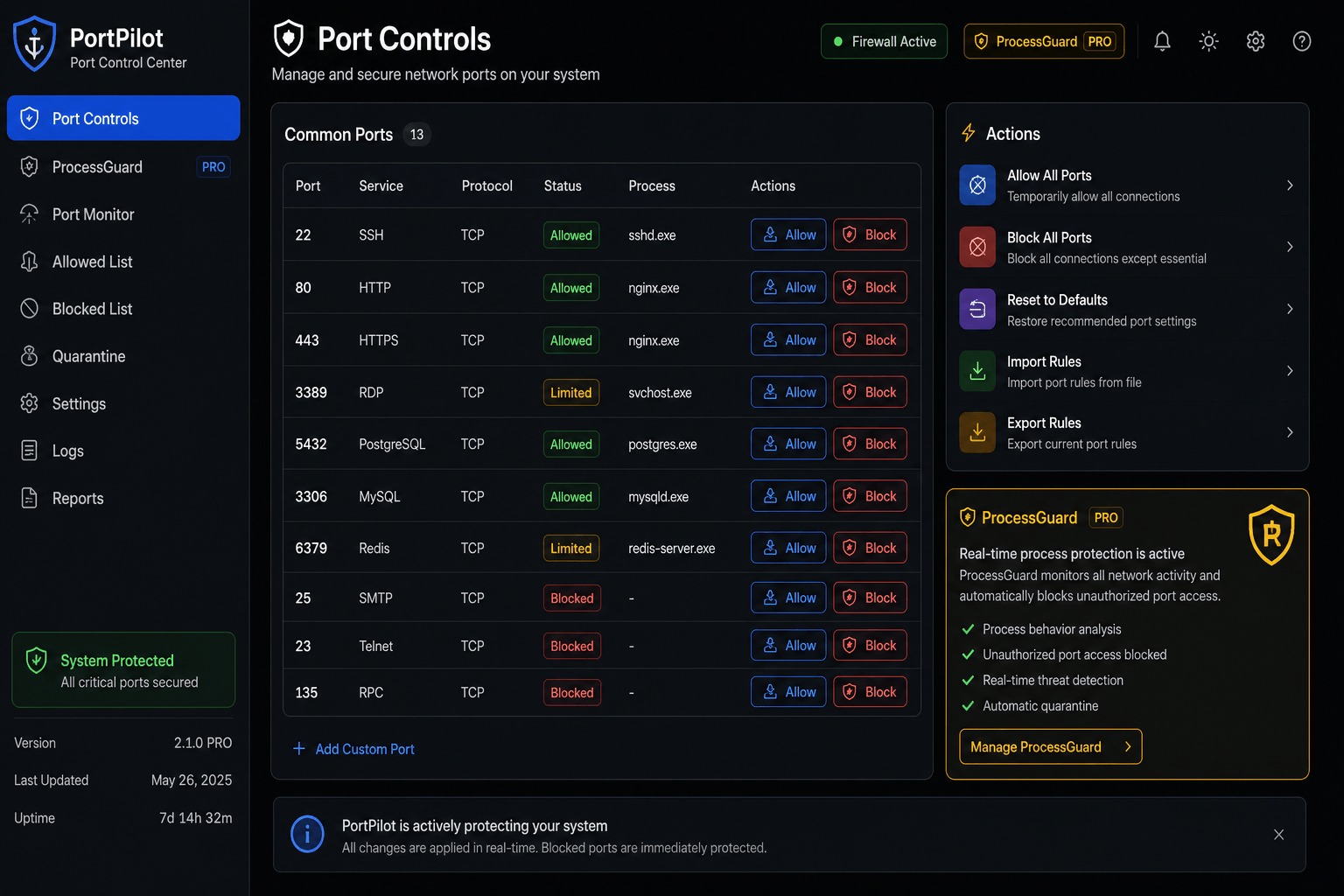
Safe controls
Kill, service start/stop/restart, and PortPilot-named firewall rules go through an allowlisted helper. The agent validates every action independently of the UI.
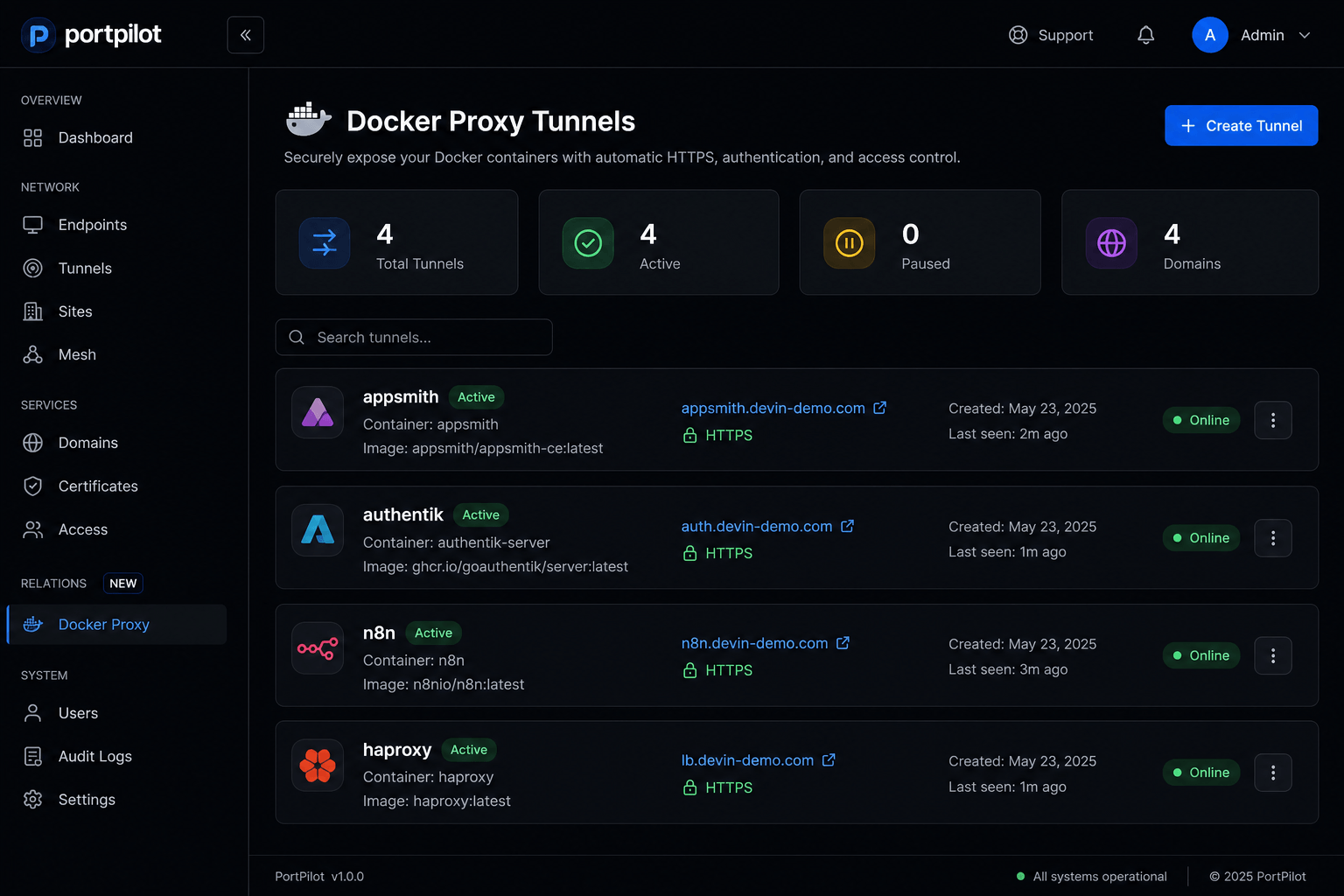
Awareness
See how a port relates to container publishes, nginx/Caddy/Traefik/Apache routes, and ngrok tunnels - read-only awareness, not another CLI to babysit.
Command palette
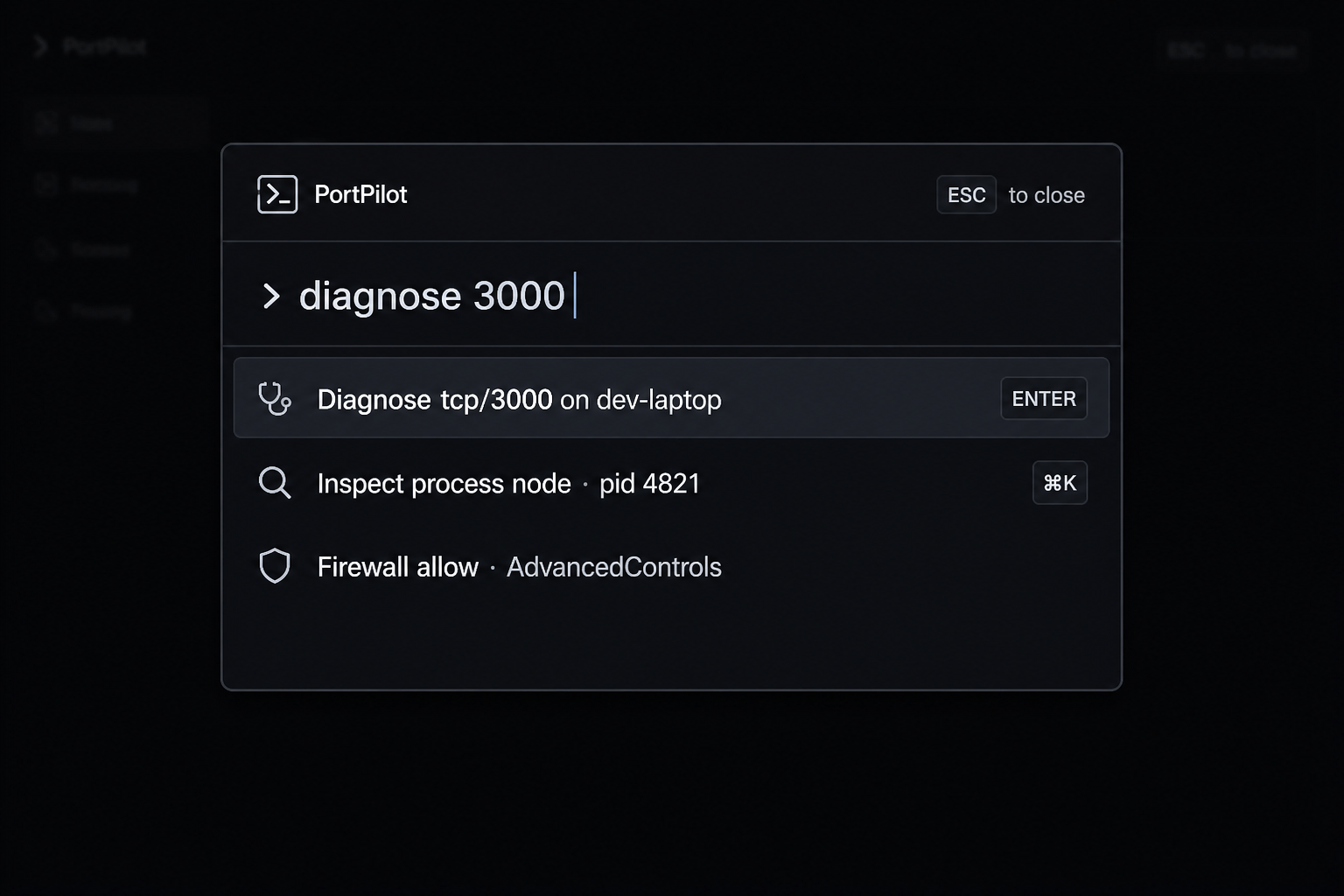
Diagnose, kill, firewall, and fleet filters from Cmd+K. Offline machines stay blocked; destructive actions still confirm.
How it works
Run PortPilot on each host. It discovers listening ports and stores history locally in SQLite.
Create a short-lived pairing code. The agent enrolls with an Ed25519 device key - outbound WebSocket only.
Use the website or CLI for fleet views, diagnose, kill, firewall, and tunnels - with CSRF, ownership, and entitlements enforced.
Who it is for
Use PortPilot when you need to see what is listening, why it is unhealthy, and act without opening a shell — on a laptop, a homelab, or a small Windows/Linux fleet.
x64 Windows 10/11 via MSI. x86_64 Linux with systemd via install script. macOS and Windows ARM64 are not supported.
DownloadDiscovery and history live on the host. Pair a machine when you want the website dashboard. Cloud sync, notifications, and backups are a separate subscription.
What Cloud addsPlans
Start free on one machine. Unlock advanced controls for life, or add cloud sync when you want fleet continuity. Checkout adapts to your local currency where Stripe supports it.
Local-first observation and core controls
£0
1 machine · forever
Advanced controls for serious hosts
£99
Lifetime · 1 machine
Fleet sync and account continuity
£150
Billed yearly · 3 machines default · save vs monthly
GBP list prices. Checkout adapts to local currency where Stripe supports it. Manage licences in Settings → Billing. Lifetime Pro upgrades are 10% off; active Pro includes £5/mo off Cloud. AppSumo deal prices are listed separately on the AppSumo page.
FAQ
Yes. The agent discovers ports, stores history in SQLite, and talks to the CLI over local IPC. Cloud pairing is optional for fleet views, sync, notifications, and backups.
Only an allowlisted set of operations: ping, kill with ProcessGuard, service control, and PortPilot-named firewall rules. There is no shell or arbitrary exec API.
Free covers observation and core process/service controls on one machine. Pro is a lifetime licence by machine tier and adds firewall mutate, ngrok tunnels, and extra machines. Cloud is a subscription that includes the Pro feature set plus durable sync, notifications, and account backups. Active lifetime Pro takes £5/month off Cloud.
Machine state stays on the host by default. Paired machines can sync selected history to PortPilot Cloud. Account backups cover prefs and display metadata — not credentials.
No. Agents open an outbound WebSocket to the cloud gateway. Browsers never talk directly to a privileged local agent.